
Why Is My Smoke Detector Beeping? What Each Chirp Pattern Means
A smoke alarm that beeps once every 30 to 60 seconds is chirping, not alarming. The most common cause is a low battery. If chirping continues after a battery change, the alarm has likely reached the end of its 10-year lifespan and needs replacing. A continuous, repeating alarm means smoke or fire has been detected — leave the building immediately and call 911.
That sound at 2 a.m. is not your USI smoke alarm failing. It's your smoke alarm working. Every beep pattern carries a specific message, and mixing them up wastes time you don't have in a real emergency. This guide breaks each one down so you know exactly what to do, without guessing.
Smoke Alarm Beep Patterns at a Glance
Smoke alarm beep patterns fall into five categories: single chirps signal a low battery or end-of-life warning, three-beep and four-beep repeating patterns signal fire or carbon monoxide, and a brief single chirp after a power interruption is normal reset behavior requiring no action.
| Beep Pattern | What It Means | What to Do |
|---|---|---|
| 1 chirp every 30–60 seconds | Low battery or end-of-life warning | Replace battery. If it continues, replace the alarm. |
| 3 beeps, pause, repeating | Smoke or fire detected | Leave immediately. Call 911. Do not investigate. |
| 4 beeps, pause, repeating | Carbon monoxide detected | Leave immediately. Get fresh air. Call 911. |
| 2 chirps every 60 seconds, repeating | End-of-life indicator (10+ years old) | Replace the alarm. A battery change will not help. |
| Brief chirp after power restored | Alarm resetting after a power interruption | Normal behavior. No action needed. |
If you hear a continuous, repeating alarm, don't search for the source. Leave the building, close doors behind you, and call 911 from outside.

Why Is Your Smoke Alarm Chirping?
Chirping is a maintenance signal, not an emergency. USI smoke alarms most commonly chirp because of a low battery, an alarm past its 10-year service life, an overnight temperature drop, humidity, a low hardwired backup battery, or dust inside the sensor chamber.
1. Low Battery
The single most common cause. Replace the battery with a fresh alkaline 9V, or the battery type specified on the label on the back of your alarm. If the chirping stops, you're done. If it continues, keep reading.
2. End of Useful Life
Smoke alarms should be replaced every 10 years. After a decade, the internal sensors degrade, and the alarm can no longer detect smoke with the same accuracy. Many USI alarms chirp in a distinct end-of-life pattern — commonly 2 chirps — as they approach this threshold. If your alarm is 10 years old or older, a new battery will not fix the chirping. The manufacture date is printed on the back of every USI alarm.
3. Temperature Drop at Night
Batteries behave differently as temperatures shift. When a room cools overnight, voltage can dip just enough to trip the low-battery warning — which is exactly why smoke alarms have a reputation for chirping at 2 a.m. The fix is still a fresh battery. The timing is just especially inconvenient.
4. Environmental Interference
High humidity from a nearby bathroom, shower steam, or lingering cooking fumes can cause brief, intermittent beeping that clears on its own. If the beeping stops and there's no smoke present, this is the likely cause — check whether the alarm sits too close to a steam or moisture source.
5. Hardwired Alarm with Low Backup Battery
Hardwired smoke alarms still carry a battery backup that needs periodic replacement. Even with AC power running to the unit, a low backup battery will trigger the chirp. Replace it with the type specified in your product manual.
6. Dust or Debris in the Sensor
Particles inside the sensor chamber can interfere with detection and trigger false signals. Gently vacuum the exterior of your alarm with a soft brush attachment once a year. Never spray compressed air or cleaning products into the unit.
How to Stop a Smoke Alarm from Chirping
Stopping a chirping smoke alarm takes four steps in order: replace the battery, hold the test button to clear residual charge, check the manufacture date if chirping persists, and inspect battery contacts for corrosion if the unit is still under 10 years old.
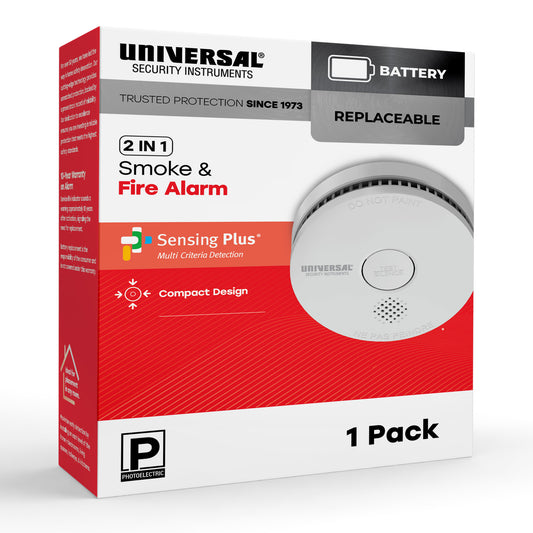
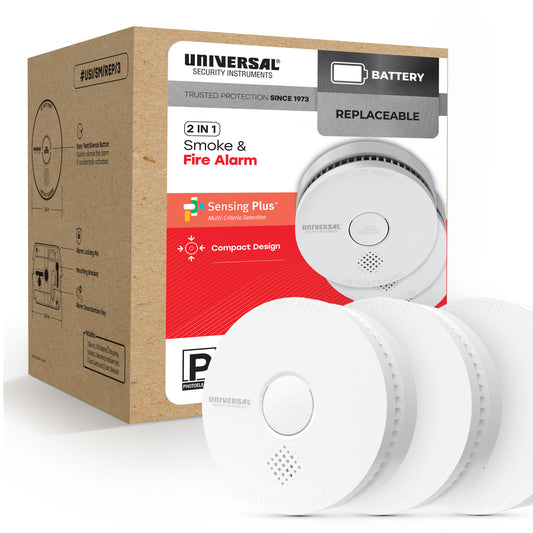
- Replace the battery — fresh alkaline 9V, or the type printed on the back of the alarm (replace the backup battery for hardwired units).
- Press and hold the test button after installing the new battery. This clears residual charge and stops the chirp immediately on most models.
- If chirping continues, check the manufacture date. Ten or more years old means the alarm needs replacing, not a new battery.
- If the alarm is under 10 years old and still chirping, check for corroded battery contacts and confirm the battery is fully seated.
The Easiest Fix: Upgrade to a 10-Year Battery Alarm
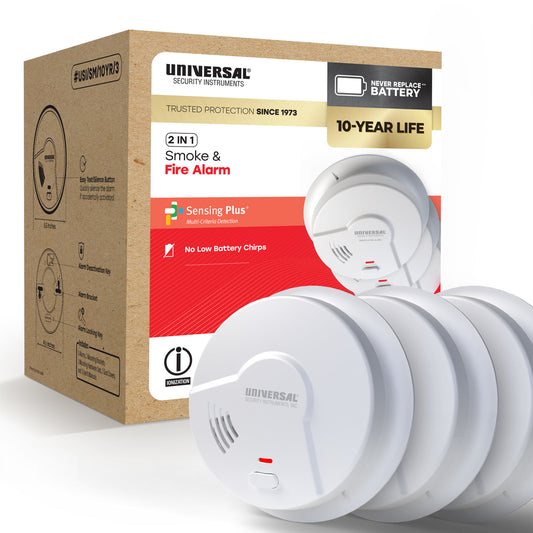
USI's 10-Year Battery Smoke & Fire Alarm uses a factory-sealed lithium battery that lasts the alarm's full 10-year service life, eliminating annual battery changes and middle-of-the-night chirps entirely. Install it, test monthly, and replace the whole unit at year 10.
If you've ever been pulled out of bed by a chirp at 2 a.m., the appeal of a sealed 10-year battery smoke alarm is obvious. There's no replaceable battery cycle to manage — install it, test it monthly, and replace the unit when it reaches end of life. That's the entire maintenance schedule.
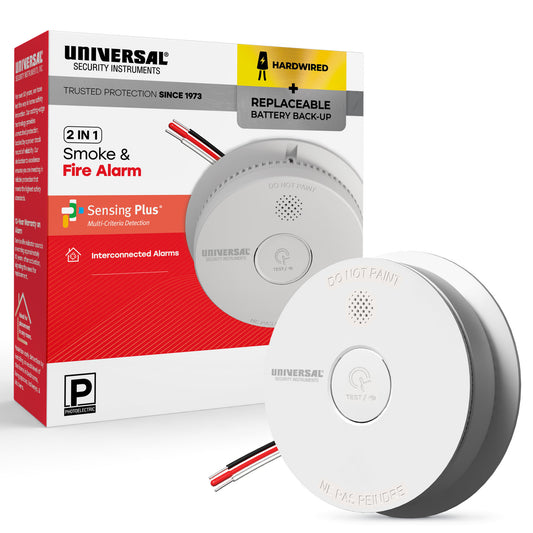
For homes with hardwiring, the Hardwire Smoke & Fire Alarm with 10-Year Battery Backup keeps the AC connection intact and adds a sealed 10-year backup battery, so you get mains-powered protection plus a full decade of backup coverage with zero battery maintenance.
For advanced protection with the same low-maintenance design, the Sensing Plus Multi Criteria Smoke & Fire Alarm pairs a tamper-proof 10-year sealed battery with USI's Sensing Plus technology — combining photoelectric and ionization detection in one unit for fewer false alarms from everyday cooking and faster response to both smoldering and fast-flaming fires.
When Should You Replace Your Smoke Alarm?
Replace every smoke alarm every 10 years regardless of apparent function, since sensor sensitivity degrades gradually and a unit that passes a monthly test can still fail to detect a real fire fast enough. Replace immediately after heat exposure, flooding, visible damage, or persistent chirping under 10 years old.
Replace the alarm immediately if it has been exposed to significant heat from a nearby fire (even without a full alarm trigger), submerged in water or flooding, visibly damaged or cracked, or if it keeps chirping after a battery change and is less than 10 years old.
Ready to Eliminate the Chirp for Good?
Explore USI's full lineup of 10-year battery smoke alarms. Trusted protection, zero battery headaches, 50+ years of home safety innovation.